Living in Alignment with the Seasons: leaning into wintering
Happy new year!
We are over a week into 2026 and things are starting to pick up as we all collectively move back into our routines and work. While much of the world is buzzing with talk of new goals, new ways of existing, new things to embrace–much of nature is quietly resting and fueling up! The trees have lost their leaves, the animals have tucked off to hibernate, the flowers are few, and the air is crisp. Everything around us feels barren, quiet, and contemplative as the quiet hum of rest buzzes beneath the surface. This, in my opinion, is the most important time of the year as we create our capacity and fill our cups. Winter is the one time of year where everything slows down and there is an inward focus we each experience that causes us to take it easy and rest. Given that we have come off of the biggest season of going, doing, and spending, it’s important to have moments after to recuperate and reflect. THAT is what wintering is for!

What is Wintering?
Recently, the concept of “wintering” has become popularized in the media to capture the essence of this time of year. As mentioned by Katherine May,
Wintering is an intentional, conscious withdrawal and acceptance of periods of darkness, illness, loss, or transition, rather than fighting them, to rebuild strength for future growth.
The most important part is the intentional and conscious practice of slowing down, conserving energy, reflection, and release to allow us to move past feelings like burn out and begin to thrive.

Your Wintering Toolkit
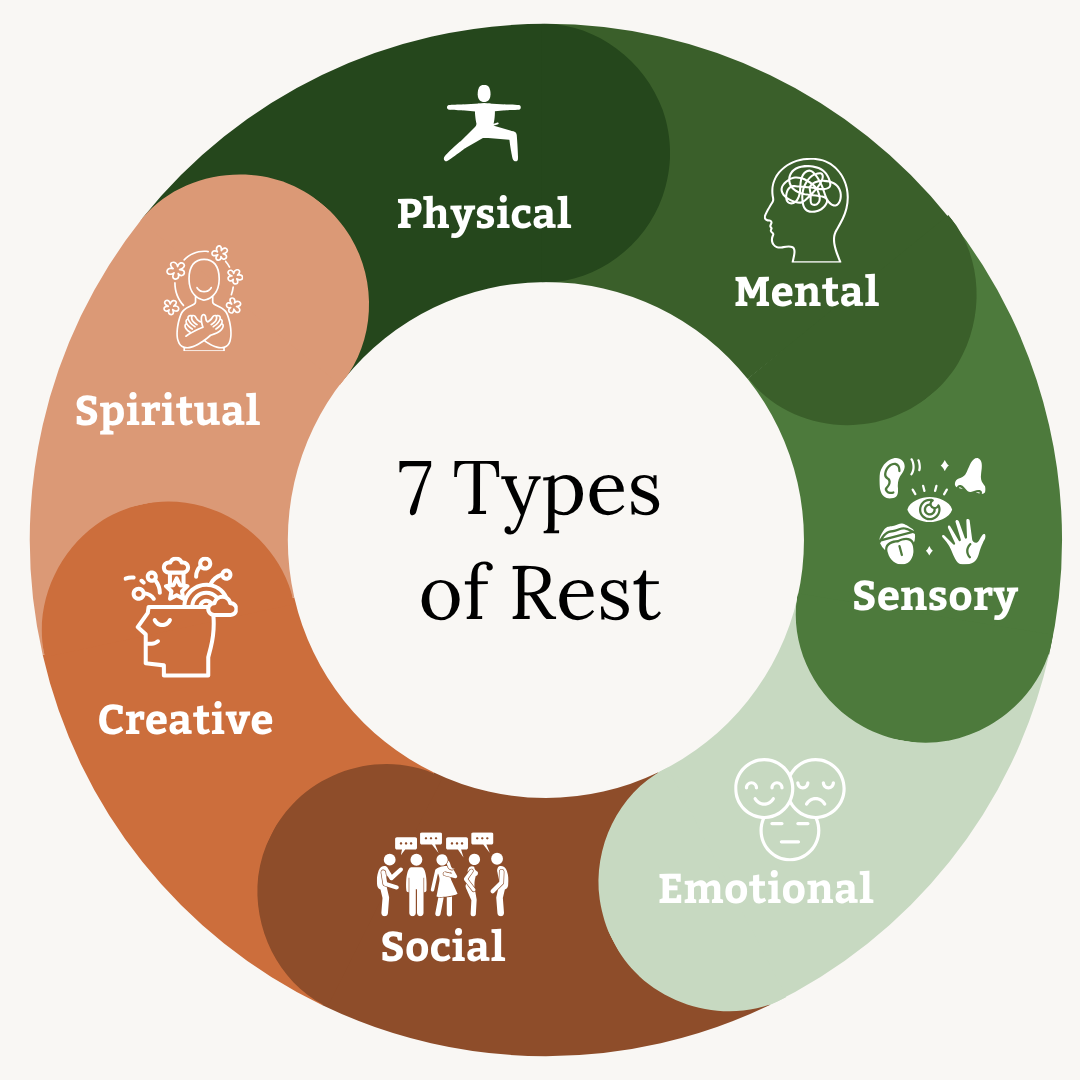
The most important part of the process is resting deeply and fully! So how can you embrace your own season of wintering with intention and come out of it feeling energized, creative, and imaginative for spring? There are 3 main types of rest to focus on: mental, physical, and emotional. Let’s break them down and discuss!
Mental Rest
Mental rest is the rest we provide to our brains when we allow ourselves to mentally be “offline” and lean more into observation over action. This is when we allow our brains to be without the pressure of performing. Our brains work best when we have a routine but they do need a break from time to time to restore and reset. Some ways to practice mental rest are by:

Taking naps
Spending more time outside
Coloring
Cancelling your plans
Spending time alone
Having a “do nothing” day
Dilly dallying and taking more time for things
Doing 1 thing at a time
Doing a brain dump, journaling exercise
Meditation (aiming for longer sessions ~20min)
Physical rest
Physical rest is the rest we provide to our bodies to restore our muscles and move stagnant energy. This is when we allow our bodies time to move slow or be still and be energized. Types of physical rest you may consider are:
Stretching/yoga
Taking a nap (this one is really good for just about everything)
Getting a massage
Practicing Qi Gong or Tai Chi to connect the mind, body, & breath
Taking a bath
Star or sky gazing
Taking a slow walk or nature hike

Emotional rest
Emotional rest is the rest we provide to our nervous systems. This is when we allow our bodies a chance to release, grieve, and feel deeply. This type of rest is most important as it helps us strengthen our immune system, store our memories, and process what is happening to and around us. Some of the ways we can practice emotional rest are:

Getting 7-9 hours of rest or taking longer naps around 1-2hrs to activate our deeper brain waves and sleep cycle
Crying
Taking a social media break
Writing short stories, poetry, or journaling
Spoken word or video diaries
Spending time with loved ones
Visiting the beach (winter time is a great, quiet time to visit!)
Reflect, Release, Rejuvenate
Remember, winter lasts until spring which will be March 20th this year (2026)! It’s important to pace yourself and take your time in what you do and how you do it! I suggest filling these following weeks with a mix of activities you can add to your routine to create more support overall. The goal isn’t to try to achieve more perfection but to create more capacity through observation and adjustment. If you are having a hard time allowing yourself space/time to slow down, consider the following journal prompts below or check out our blog post for 25 Journal Prompts to help you slow down and find intention.
Journal prompts:
What makes me feel like I cannot slow down? How can I give myself more permission to rest?
Do I currently hold beliefs about my worthiness to rest that are not true? Where did these beliefs or stories come from?
What does rest mean to me? Does this meaning feel supportive? What can I change about how I approach rest to make it feel less daunting?
How do I relate rest, productivity, and my worth? Is rest a reward I only give myself after I feel I have “earned it”? Why?
What is my ideal day of rest? What is the difference between how I currently find rest and what feels ideal for me? How can I close this gap?